Participant Guide
Saturday, April 18th, 2026
When the Stadium Became a Shelter: Lessons from New Orleans
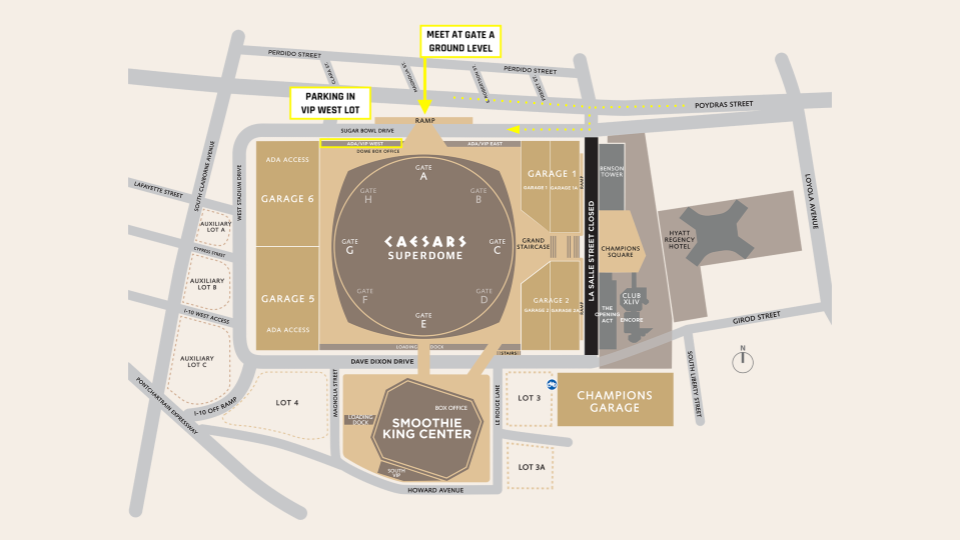
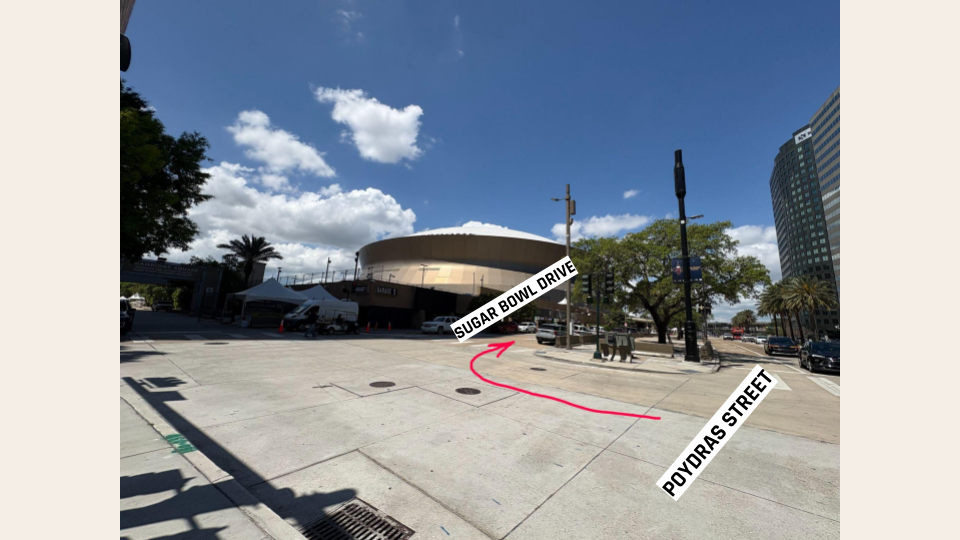
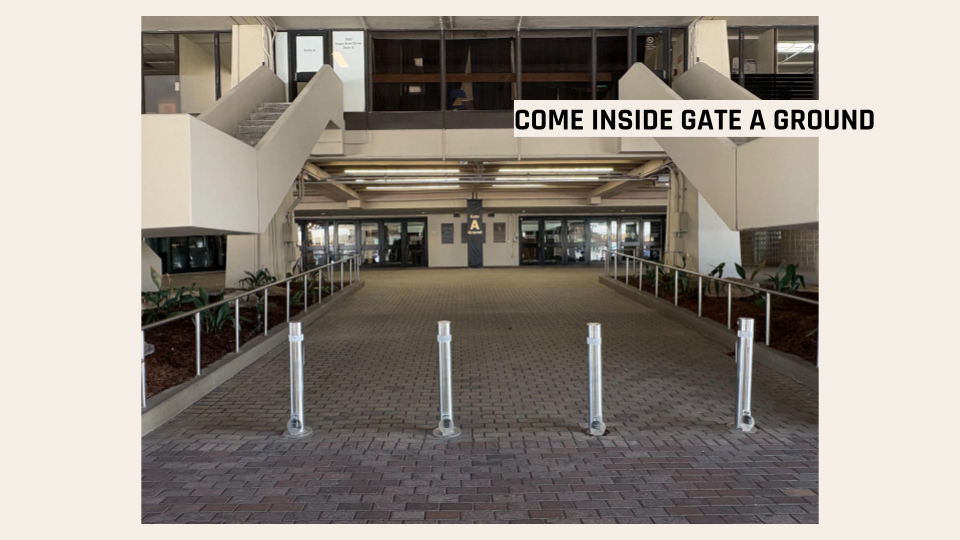
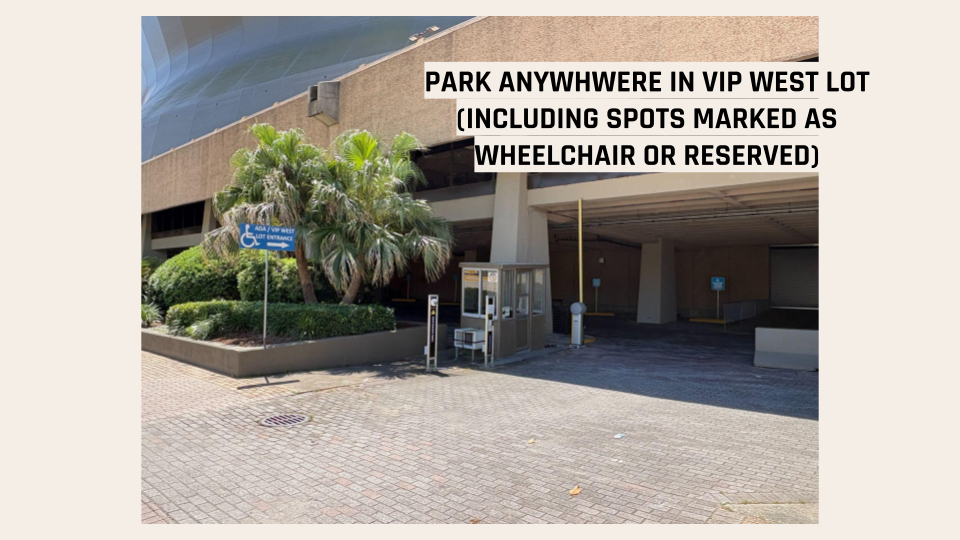
Meet at Caesars Superdome Gate A ground level starting from 9:00am to clear a security check. Parking is available in the VIP West Lot. Our program will begin promptly at 9:30am.
French Quarter Festival Immersive – Learning station
Alternative Energy for Events & Emergencies
Portable solar power is increasingly present at festivals and events… and increasingly relevant when the grid goes down. This hands-on session covers basic operations and safety for portable solar units, including back-of-the-napkin energy calculations for real-world scenarios from home use to facility-level deployment. We’ll also explore how the disaster preparedness sector can build staff and volunteer capacity using events as low-stakes opportunities to develop skills and stress-test infrastructure before its needed most.
Nate Heegaard
Associate Director of Technology, The Footprint Project
Jackson Square / The Presbytère
Exact location to be confirmed
French Quarter Festival Immersive – Learning station
Beat the Heat: Designing for Human Health & Climate
Michael Ince
Director, City of New Orleans, Office of Nighttime Economy
The Presbytère
2nd Floor Gallery
French Quarter Festival Immersive – Learning station
Inside New Orleans’ Public Safety Playbook
How do you keep tens of thousands of people safe at events… fifty times a week, every week of the year? It’s the daily reality for New Orleans Police Department, and this session draws on decades of their special events experience to walk through how public safety professionals build operational plans for events of every scale.
For safety and security professionals, it’s a chance to learn from one of the world’s most celebrated event cities and compare notes. For event producers and cultural venue professionals, you’ll come away with new perspectives for your own safety planning, and better equipped to collaborate effectively with public safety and other civic partners.
Captain Anthony (Buddy) Micheu
Special Events and Traffic Commander, New Orleans Police Department
NOPD Eighth District Station
334 Royal Street
Leigh Maher
General Manager, Lake Eden Retreat
The Presbytère
Mardi Gras Exhibition, 2nd floor
French Quarter Festival Immersive – Learning station
Event & Emergency Planning
Participants will explore how their event planning expertise translates directly to emergency management in this interactive session led by Emma Skilbred of the New Orleans Office of Coordination and Emergency Management (NOCEM). Through a realistic scenario exercise, attendees will identify key actions in real time and map them across core functions of Operations, Logistics, Communications, and Coordination. We’ll then connect these decisions to real-world incident response and explore how they align with existing response networks and partners. The session highlights how event professionals’ skills directly support readiness and response efforts, creating opportunities for more strategic alignment and engagement.
Emma Skilbread
Community Engagement Branch Administrator, New Orleans Office of Coordination and Emergency Management (NOCEM)
The Presbytère
Katrina exhibition, ground floor
Pocket Schedule: Orange Group
Group lead: Matthew Kowal, Majestic Collaborations
1:00 - 1:20 pm | Welcome Opening Session @ The Presbytère
1:20 - 1:30 pm | Beat the Heat @ The Presbytère
Led by Michael Ince, Director, City of New Orleans, Office of Nighttime Economy
In crowded events and emergency situations alike, heat stress can turn an already complex situation into a secondary crisis. Before we move out into the festival today, this quick session covers how to identify early signs of heat stress and dehydration in crowds and how to design facilities and rest areas that account for local climate and urban design.
1:40 - 2:05 pm | Inside New Orleans’ Public Safety Playbook @ NOPD Station
Led by Captain Anthony (Buddy) Micheu, Special Events and Traffic Commander, New Orleans Police Department
How do you keep tens of thousands of people safe at events… fifty times a week, every week of the year? It’s the daily reality for New Orleans Police Department, and this session draws on decades of their special events experience to walk through how public safety professionals build
operational plans for events of every scale.
For safety and security professionals, it’s a chance to learn from one of the world’s most celebrated event cities and compare notes. For event producers and cultural venue professionals, you’ll come away with new perspectives for your own safety planning, and better equipped to collaborate effectively with public safety and other civic partners.
2:15 - 2:40pm | Alternative Energy for Events & Emergencies @ Jackson Square
Led by Nate Heegaard, Associate Director of Technology, Footprint Project
Portable solar power is increasingly present at festivals and events — and increasingly relevant when the grid goes down. This hands-on session covers basic operations and safety for portable solar units, back-of-the-napkin energy calculations for real-world scenarios from family scale up to facility-level deployment, and what it looks like to build staff and volunteer capacity through repeated festival use — treating events as low-stakes opportunities to develop skills and stress-test infrastructure before you need it most.
2:50 - 3:15pm | Event & Emergency Planning Parallels @ The Presbytère
Led by Emma Skilbread, NOCEM/NOLA Ready Community Engagement Branch Administrator
Participants will explore how their event planning expertise translates directly to emergency management in this interactive session led by Emma Skilbred of the New Orleans Office of Coordination and Emergency Management (NOCEM). Through a realistic scenario exercise, attendees will identify key actions in real time and map them across core functions of Operations, Logistics, Communications, and Coordination. We’ll then connect these decisions to real-world incident response and explore how they align with existing response networks and partners. The session highlights how event professionals’ skills directly support readiness and response efforts, creating opportunities for more strategic alignment and engagement.
3:20 - 3:45pm | Festival Shop Talk @ The Presbytère
Led by Leigh Maher, General Manager, Lake Eden Retreat
Leigh Maher, former festival director of LEAF Global Arts, shares stories and hard-earned tactics from decades co-leading the festival with former executive director Jennifer Pickering. Grounded in the reality that there are rarely off-the-shelf solutions, this session emphasizes working with what you have to design safety strategies that fit your specific context.
Leigh walks through how their team developed practical approaches to managing crowds, strengthening communication, and maintaining safety in a uniquely complex festival environment. The session also explores how to recognize early warning signs before issues escalate, and how to make effective on-the-ground decisions that keep events running smoothly. A closing Q&A invites practitioners from across sectors to share challenges, exchange insights, and collaboratively explore strategies for safer, more successful events.
3:45 - 4:00 pm | Wrap-up @ The Presbytère
From 4-5pm, explore French Quarter Festival on your own or in groups, equipped with some ReadyWhen observational tools!
Pocket Schedule: Purple Group
Group lead: Rob Layne, IFCPP
1:00 - 1:20 pm | Welcome Opening Session @ The Presbytère
1:20 - 1:30 pm | Beat the Heat @ The Presbytère
Led by Michael Ince, Director, City of New Orleans, Office of Nighttime Economy
In crowded events and emergency situations alike, heat stress can turn an already complex situation into a secondary crisis. Before we move out into the festival today, this quick session covers how to identify early signs of heat stress and dehydration in crowds and how to design facilities and rest areas that account for local climate and urban design.
1:40 - 2:05 pm | Inside New Orleans’ Public Safety Playbook @ NOPD Station
Led by Captain Anthony (Buddy) Micheu, Special Events and Traffic Commander, New Orleans Police Department
How do you keep tens of thousands of people safe at events… fifty times a week, every week of the year? It’s the daily reality for New Orleans Police Department, and this session draws on decades of their special events experience to walk through how public safety professionals build
operational plans for events of every scale.
For safety and security professionals, it’s a chance to learn from one of the world’s most celebrated event cities and compare notes. For event producers and cultural venue professionals, you’ll come away with new perspectives for your own safety planning, and better equipped to collaborate effectively with public safety and other civic partners.
2:15 - 2:40 pm | Festival Shop Talk @ The Presbytère
Led by Leigh Maher, General Manager, Lake Eden Retreat
Leigh Maher, former festival director of LEAF Global Arts, shares stories and hard-earned tactics from decades co-leading the festival with former executive director Jennifer Pickering. Grounded in the reality that there are rarely off-the-shelf solutions, this session emphasizes working with what you have to design safety strategies that fit your specific context.
Leigh walks through how their team developed practical approaches to managing crowds, strengthening communication, and maintaining safety in a uniquely complex festival environment. The session also explores how to recognize early warning signs before issues escalate, and how to make effective on-the-ground decisions that keep events running smoothly. A closing Q&A invites practitioners from across sectors to share challenges, exchange insights, and collaboratively explore strategies for safer, more successful events.
2:50 - 3:15pm | Event & Emergency Planning Parallels @ The Presbytère
Led by Emma Skilbread, NOCEM/NOLA Ready Community Engagement Branch Administrator
Participants will explore how their event planning expertise translates directly to emergency management in this interactive session led by Emma Skilbred of the New Orleans Office of Coordination and Emergency Management (NOCEM). Through a realistic scenario exercise, attendees will identify key actions in real time and map them across core functions of Operations, Logistics, Communications, and Coordination. We’ll then connect these decisions to real-world incident response and explore how they align with existing response networks and partners. The session highlights how event professionals’ skills directly support readiness and response efforts, creating opportunities for more strategic alignment and engagement.
3:20 - 3:45 pm | Alternative Energy for Events & Emergencies @ Jackson Square
Led by Nate Heegaard, Associate Director of Technology, Footprint Project
Portable solar power is increasingly present at festivals and events — and increasingly relevant when the grid goes down. This hands-on session covers basic operations and safety for portable solar units, back-of-the-napkin energy calculations for real-world scenarios from family scale up to facility-level deployment, and what it looks like to build staff and volunteer capacity through repeated festival use — treating events as low-stakes opportunities to develop skills and stress-test infrastructure before you need it most.
3:45 - 4:00 pm | Wrap-up @ The Presbytère
From 4-5pm, explore French Quarter Festival on your own or in groups, equipped with some ReadyWhen observational tools!
Pocket Schedule: Blue Group
Group lead: Stephanie Schraeder, IFCPP
1:00 - 1:20 pm | Welcome Opening Session @ The Presbytère
1:20 - 1:30 pm | Beat the Heat @ The Presbytère
Led by Michael Ince, Director, City of New Orleans, Office of Nighttime Economy
In crowded events and emergency situations alike, heat stress can turn an already complex situation into a secondary crisis. Before we move out into the festival today, this quick session covers how to identify early signs of heat stress and dehydration in crowds and how to design facilities and rest areas that account for local climate and urban design.
1:40 - 2:05 pm | Festival Shop Talk @ The Presbytère
Led by Leigh Maher, General Manager, Lake Eden Retreat
Leigh Maher, former festival director of LEAF Global Arts, shares stories and hard-earned tactics from decades co-leading the festival with former executive director Jennifer Pickering. Grounded in the reality that there are rarely off-the-shelf solutions, this session emphasizes working with what you have to design safety strategies that fit your specific context.
Leigh walks through how their team developed practical approaches to managing crowds, strengthening communication, and maintaining safety in a uniquely complex festival environment. The session also explores how to recognize early warning signs before issues escalate, and how to make effective on-the-ground decisions that keep events running smoothly. A closing Q&A invites practitioners from across sectors to share challenges, exchange insights, and collaboratively explore strategies for safer, more successful events.
2:15 - 2:40 pm | Inside New Orleans’ Public Safety Playbook @ NOPD Station
Led by Captain Anthony (Buddy) Micheu, Special Events and Traffic Commander, New Orleans Police Department
How do you keep tens of thousands of people safe at events… fifty times a week, every week of the year? It’s the daily reality for New Orleans Police Department, and this session draws on decades of their special events experience to walk through how public safety professionals build
operational plans for events of every scale.
For safety and security professionals, it’s a chance to learn from one of the world’s most celebrated event cities and compare notes. For event producers and cultural venue professionals, you’ll come away with new perspectives for your own safety planning, and better equipped to collaborate effectively with public safety and other civic partners.
2:50 - 3:15 pm | Alternative Energy for Events & Emergencies @ Jackson Square
Led by Nate Heegaard, Associate Director of Technology, Footprint Project
Portable solar power is increasingly present at festivals and events — and increasingly relevant when the grid goes down. This hands-on session covers basic operations and safety for portable solar units, back-of-the-napkin energy calculations for real-world scenarios from family scale up to facility-level deployment, and what it looks like to build staff and volunteer capacity through repeated festival use — treating events as low-stakes opportunities to develop skills and stress-test infrastructure before you need it most.
3:20 - 3:45 pm | Event & Emergency Planning Parallels @ The Presbytère
Led by Emma Skilbread, NOCEM/NOLA Ready Community Engagement Branch Administrator
Participants will explore how their event planning expertise translates directly to emergency management in this interactive session led by Emma Skilbred of the New Orleans Office of Coordination and Emergency Management (NOCEM). Through a realistic scenario exercise, attendees will identify key actions in real time and map them across core functions of Operations, Logistics, Communications, and Coordination. We’ll then connect these decisions to real-world incident response and explore how they align with existing response networks and partners. The session highlights how event professionals’ skills directly support readiness and response efforts, creating opportunities for more strategic alignment and engagement.
3:45 - 4:00 pm | Wrap-up @ The Presbytère
From 4-5pm, explore French Quarter Festival on your own or in groups, equipped with some ReadyWhen observational tools!
Pocket Schedule: Green Group
Group lead: Amanda Loflin
1:00 - 1:20 pm | Welcome Opening Session @ The Presbytère
1:20 - 1:30 pm | Beat the Heat @ The Presbytère
Led by Michael Ince, Director, City of New Orleans, Office of Nighttime Economy
In crowded events and emergency situations alike, heat stress can turn an already complex situation into a secondary crisis. Before we move out into the festival today, this quick session covers how to identify early signs of heat stress and dehydration in crowds and how to design facilities and rest areas that account for local climate and urban design.
1:40 - 2:05 pm | Alternative Energy for Events & Emergencies @ Jackson Square
Led by Nate Heegaard, Associate Director of Technology, Footprint Project
Portable solar power is increasingly present at festivals and events — and increasingly relevant when the grid goes down. This hands-on session covers basic operations and safety for portable solar units, back-of-the-napkin energy calculations for real-world scenarios from family scale up to facility-level deployment, and what it looks like to build staff and volunteer capacity through repeated festival use — treating events as low-stakes opportunities to develop skills and stress-test infrastructure before you need it most.
2:15 - 2:40 pm | Inside New Orleans’ Public Safety Playbook @ NOPD Station
Led by Captain Anthony (Buddy) Micheu, Special Events and Traffic Commander, New Orleans Police Department
How do you keep tens of thousands of people safe at events… fifty times a week, every week of the year? It’s the daily reality for New Orleans Police Department, and this session draws on decades of their special events experience to walk through how public safety professionals build
operational plans for events of every scale.
For safety and security professionals, it’s a chance to learn from one of the world’s most celebrated event cities and compare notes. For event producers and cultural venue professionals, you’ll come away with new perspectives for your own safety planning, and better equipped to collaborate effectively with public safety and other civic partners.
2:50 - 3:15 pm | Festival Shop Talk @ The Presbytère
Led by Leigh Maher, General Manager, Lake Eden Retreat
Leigh Maher, former festival director of LEAF Global Arts, shares stories and hard-earned tactics from decades co-leading the festival with former executive director Jennifer Pickering. Grounded in the reality that there are rarely off-the-shelf solutions, this session emphasizes working with what you have to design safety strategies that fit your specific context.
Leigh walks through how their team developed practical approaches to managing crowds, strengthening communication, and maintaining safety in a uniquely complex festival environment. The session also explores how to recognize early warning signs before issues escalate, and how to make effective on-the-ground decisions that keep events running smoothly. A closing Q&A invites practitioners from across sectors to share challenges, exchange insights, and collaboratively explore strategies for safer, more successful events.
3:20 3:45 pm | Event & Emergency Planning Parallels @ The Presbytère
Led by Emma Skilbread, NOCEM/NOLA Ready Community Engagement Branch Administrator
Participants will explore how their event planning expertise translates directly to emergency management in this interactive session led by Emma Skilbred of the New Orleans Office of Coordination and Emergency Management (NOCEM). Through a realistic scenario exercise, attendees will identify key actions in real time and map them across core functions of Operations, Logistics, Communications, and Coordination. We’ll then connect these decisions to real-world incident response and explore how they align with existing response networks and partners. The session highlights how event professionals’ skills directly support readiness and response efforts, creating opportunities for more strategic alignment and engagement.
3:45 - 4:00 pm | Wrap-up @ The Presbytère
From 4-5pm, explore French Quarter Festival on your own or in groups, equipped with some ReadyWhen observational tools!


This training aligns with #ReadyWhen, a project of Majestic Collaborations in collaboration with Performing Arts Readiness. It brings the best of what we’ve learned from over a decade in the field directly to arts and cultural spaces to help them strengthen their resilience through community disaster readiness.
The New Orleans program is made possible thanks to the support of the International Foundation for Cultural Property Protection, the National WWII Museum, and local partners.